
Patient Handover App
What is SBAR? The Clinical Handover Framework Explained
Understanding the gold-standard communication tool used in NHS clinical handovers

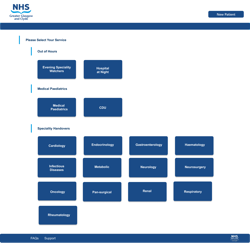
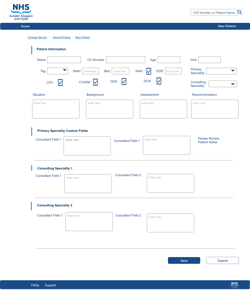
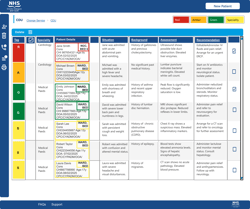
Example Designs
Pricing
Pilot
What is SBAR?
SBAR stands for Situation, Background, Assessment, Recommendation. It is a structured communication framework originally developed by the US Navy and adapted for healthcare by Kaiser Permanente in the early 2000s. It is now widely adopted across the NHS and recommended by NHS England, the Royal College of Physicians, and the World Health Organisation as a best-practice tool for clinical handovers.
SBAR provides a predictable structure for conveying critical patient information between clinicians. By standardising the format of handover communication, it reduces the risk of important details being missed, misunderstood, or forgotten — a leading cause of adverse events in healthcare settings.
Hospital
The Four Elements of SBAR
S — Situation
A concise statement of the current problem or reason for the handover. This answers the question: What is happening right now? For example: "Mrs Jones in Bed 4 is reporting increased pain and her observations show a rising NEWS2 score."
B — Background
The relevant clinical context. This includes the patient's diagnosis, relevant medical history, current treatment plan, and any recent changes. It answers: What led to this situation?
A — Assessment
The clinician's professional judgement of what is happening. This is where clinical reasoning is communicated: What do I think the problem is? For example: "I believe this may indicate post-operative infection."
R — Recommendation
The specific action being requested or suggested. This answers: What do I need you to do? For example: "I recommend reviewing the patient within the next 30 minutes and considering IV antibiotics."
Board
Why SBAR Matters in the NHS
Communication failures are the most common root cause of serious incidents in healthcare. Research published in the BMJ found that poor handover communication contributes to an estimated 80% of serious medical errors.
SBAR addresses this by:
- Reducing variability — Every handover follows the same predictable structure, regardless of who is communicating.
- Empowering junior staff — The framework gives less experienced clinicians a clear structure for escalating concerns to senior colleagues.
- Creating accountability — The Recommendation element ensures that a clear action is always requested, reducing ambiguity.
- Supporting audit and governance — When SBAR handovers are digitally recorded, they create an evidence trail for CQC inspections and clinical governance reviews.

Moving from paper SBAR sheets to a digital solution ensures no handover is lost, every entry is timestamped, and trends can be identified across wards and shifts.
Studies show that implementing structured SBAR handovers can reduce clinical incidents by up to 30% and improve team communication scores by over 40%.


See how the Patient Handover App brings SBAR to life with a digital-first approach. Request a demo

Andy is our Founder of Patient Handover App he started the business to deliver innovative Microsoft Apps to the health care sector. Andy has been building apps for over 20 years.
Book a call to start your patient handover journey.